
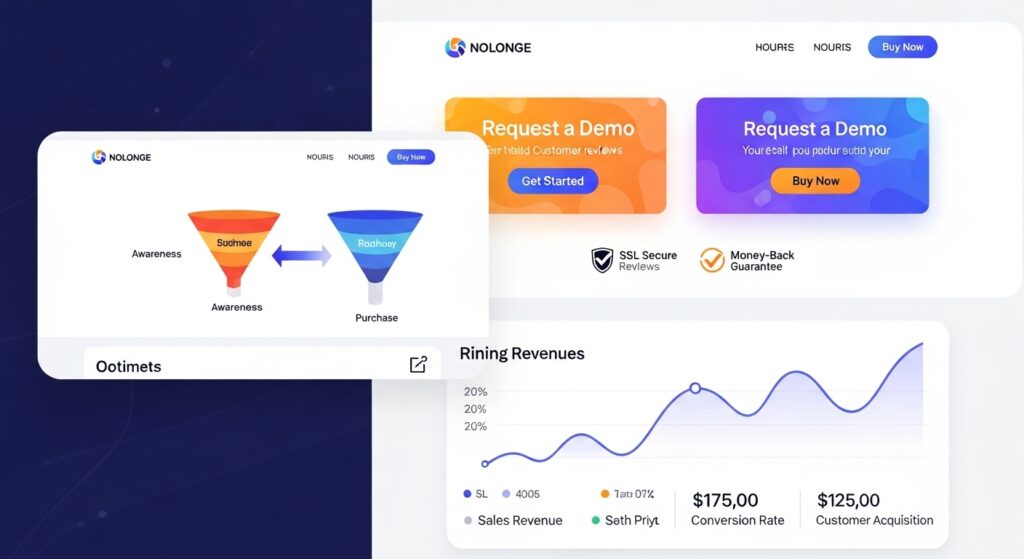
From Website to Sales Machine: How Conversion-Focused Design Drives Revenue
A website should be more than an online presence — it should function as a sales machine that consistently converts visitors into leads and customers. Businesses that invest in conversion-focused design transform static websites into powerful revenue-generating assets. Instead of simply attracting traffic, they guide users strategically toward action.
In 2026, attention spans are shorter, competition is stronger, and customer expectations are higher. Therefore, businesses can no longer rely on visually appealing designs alone. A website must be structured around user psychology, clarity, speed, and measurable outcomes. When design decisions are driven by conversion goals, revenue growth becomes predictable rather than accidental.
This article explains how conversion-focused design turns a website into a scalable sales engine and why companies that adopt this strategy consistently outperform competitors.
What Is Conversion-Focused Design and Why It Matters
Conversion-focused design is a strategic approach that prioritizes user actions over aesthetics alone. While branding and visuals remain important, every design element serves a clear purpose: guiding visitors toward a specific goal.
These goals may include:
-
Booking a consultation
-
Filling out a contact form
-
Making a purchase
-
Downloading a resource
-
Requesting a quote
Unlike traditional web design, conversion-focused design is rooted in data, behavioral psychology, and user journey mapping. According to research on user experience and digital growth, websites that prioritize clarity and usability significantly improve engagement and conversions.
Therefore, design must align with measurable business objectives rather than subjective preferences.
Why Websites Without Conversion-Focused Design Fail to Generate Revenue
Many businesses invest in website development but neglect conversion strategy. As a result, they attract traffic but fail to convert visitors into paying customers.
Common issues include:
-
Confusing navigation
-
Weak calls-to-action
-
Slow loading speed
-
Poor mobile optimization
-
Lack of trust signals
-
Cluttered layouts
Although these issues may seem minor individually, together they reduce user confidence and increase bounce rates. Consequently, businesses lose potential revenue daily without realizing it.
In contrast, a website built as a sales machine eliminates friction at every stage of the customer journey.
The Psychology Behind Conversion-Focused Design
Effective conversion-focused design leverages human psychology. Users make decisions quickly, often subconsciously. Therefore, websites must guide attention intentionally.
Key psychological principles include:
-
Visual hierarchy to direct focus
-
Social proof to build credibility
-
Urgency to encourage action
-
Simplicity to reduce decision fatigue
-
Clear messaging to eliminate doubt
For example, placing a primary call-to-action above the fold increases visibility. Additionally, testimonials and case studies reduce hesitation. Studies on digital behavior patterns emphasize that user experience directly impacts purchase decisions.
When design aligns with psychology, conversions naturally improve.
Turning Traffic Into Revenue With Strategic Structure
Attracting visitors through SEO and paid ads is only the first step. The real transformation happens when a website converts that traffic efficiently.
A conversion-focused website typically includes:
1. Clear Value Proposition
Visitors should immediately understand what the business offers and why it matters.
2. Focused Messaging
Each page should address one primary goal rather than multiple distractions.
3. Strategic Calls-to-Action
Buttons must be visible, compelling, and action-oriented.
4. Optimized Landing Pages
Dedicated pages for campaigns increase relevance and improve quality scores.
5. Mobile-First Design
With mobile traffic dominating, responsiveness is non-negotiable.
When these elements work together, the website operates as a sales machine rather than a digital brochure.
The Role of Speed and Performance
Website speed directly impacts revenue. Even a one-second delay can reduce conversions significantly. Research from performance-focused studies shows that faster websites retain more users and generate higher engagement.
Therefore, conversion-focused design prioritizes:
-
Lightweight code
-
Optimized images
-
Efficient hosting
-
Clean architecture
Fast-loading pages reduce friction and maintain user attention. As a result, more visitors complete desired actions.
Data-Driven Design Improves Results
One of the strongest advantages of conversion-focused design is measurable optimization. Instead of guessing what works, businesses rely on analytics and testing.
Key methods include:
-
A/B testing
-
Heatmap analysis
-
Funnel tracking
-
Behavior flow analysis
Through continuous testing, businesses refine layouts, messaging, and calls-to-action. Consequently, conversion rates improve over time.
Rather than redesigning randomly, companies make strategic decisions backed by data.
Building Trust to Increase Revenue
Trust is a major factor in online purchasing decisions. Without it, even well-designed websites struggle to convert.
Conversion-focused design incorporates:
-
Customer testimonials
-
Case studies
-
Certifications
-
Security badges
-
Transparent pricing
-
Clear contact information
These elements reassure visitors and reduce uncertainty. When users feel secure, they are more likely to take action.
How IQC Solutions Builds Revenue-Driven Websites
At IQC Solutions, we specialize in designing websites that function as sales machines rather than static online pages. Our approach combines user experience strategy, SEO integration, and conversion optimization to maximize measurable revenue growth.
Instead of focusing only on visuals, we build:
-
Conversion-optimized landing pages
-
Integrated marketing funnels
-
High-performance website structures
-
Data-driven optimization systems
Our website development and digital strategy services sure that every design element supports business objectives.
By aligning design with performance metrics, we help businesses turn traffic into predictable revenue.
Integrating Marketing With Conversion-Focused Website Design
A website alone cannot generate consistent growth unless integrated with broader marketing efforts. Conversion-focused design works best when aligned with:
-
SEO strategies
-
Paid advertising campaigns
-
Email marketing automation
-
Social media engagement
When traffic sources align with optimized landing pages, the entire system functions cohesively. Consequently, businesses experience higher ROI across all channels.
This integrated approach transforms marketing investments into measurable returns rather than isolated expenses.
Continuous Optimization in Conversion-Focused Design
A website should evolve alongside user behavior and market trends. Therefore, conversion-focused design is not a one-time project.
Ongoing improvements may include:
-
Updating messaging based on customer feedback
-
Refining CTAs for clarity
-
Testing new layout variations
-
Improving personalization
Through continuous optimization, businesses maintain competitive advantage. Instead of stagnating, the website adapts and improves performance consistently.
From Website to Sales Machine With Conversion-Focused Design
Businesses that treat their website as a strategic asset outperform those that view it as a static necessity. Conversion-focused design creates:
-
Higher lead generation
-
Increased customer acquisition
-
Improved revenue per visitor
-
Stronger brand credibility
-
Scalable growth opportunities
Moreover, a sales-driven website reduces reliance on aggressive advertising because conversion rates improve organically.
In 2026, companies that embrace performance-driven design will dominate their industries. Those that ignore conversion strategy will continue losing revenue to better-optimized competitors.
Final Thoughts
A visually attractive website is not enough in today’s competitive market. To drive real business growth, companies must adopt conversion-focused design principles that prioritize clarity, performance, and measurable outcomes.
When implemented strategically, a website becomes more than an information hub — it becomes a scalable sales machine. By combining psychology, data, user experience, and integrated marketing, businesses can transform online traffic into predictable revenue streams.
The shift from passive website to active sales engine is no longer optional. It is essential for sustainable growth in 2026 and beyond.