
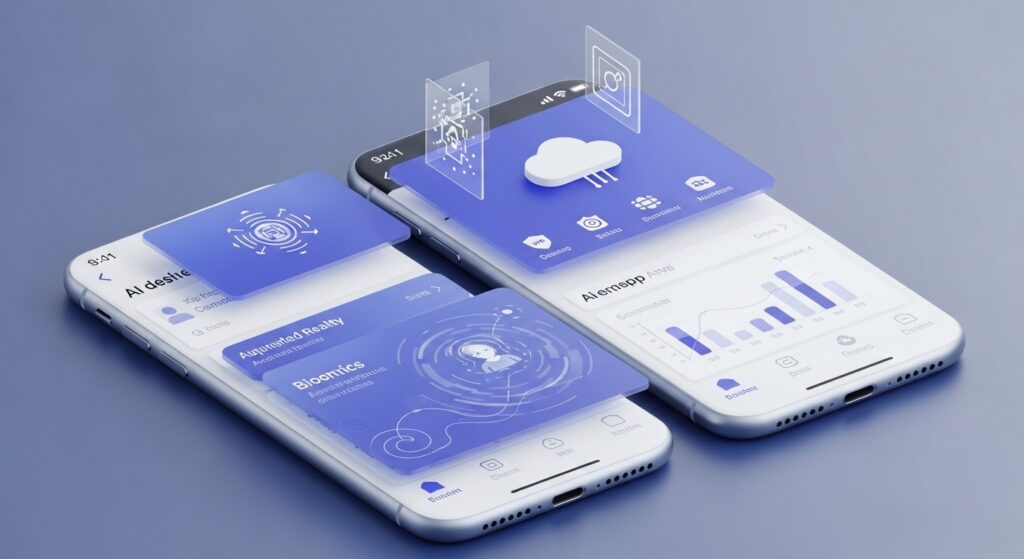
Mobile App Trends 2026: Smart Investments Businesses Must Make Now
Mobile app trends 2026 are shaping how modern businesses design digital experiences, connect with customers, and drive long-term growth. As smartphones continue to dominate daily interactions, companies must understand which mobile app development trends matter most in 2026 and how smart investments today can deliver measurable business value tomorrow. From AI-driven personalization to performance-focused design, mobile applications are becoming strategic business assets rather than simple digital tools.
They are reshaping how businesses compete, communicate, and grow in an increasingly mobile-first digital economy. The mobile apps are no longer simple extensions of websites. Instead, they have become the primary touchpoint between brands and users. From onboarding to customer retention, the mobile experience now defines business success.
As smartphones continue to dominate global internet usage, businesses must align their strategies with mobile app trends 2026 to meet rising user expectations. Customers want faster apps, smarter interfaces, stronger security, and experiences tailored specifically to their needs. Companies that fail to adapt risk losing relevance in crowded digital marketplaces.
This article explores the most important mobile app trends 2026, explains where businesses should invest, and outlines how forward-thinking organizations can build scalable, future-ready mobile applications.
Why Mobile App Trends 2026 Matter More Than Ever
The mobile landscape has changed dramatically over the last few years. Users now expect apps to behave intelligently, respond instantly, and integrate seamlessly into their daily lives. As a result, mobile app trends 2026 focus heavily on automation, personalization, and performance.
Businesses that invest in modern mobile development gain several advantages. They improve customer engagement, increase conversion rates, and strengthen long-term loyalty. Meanwhile, outdated apps often suffer from poor retention, slow performance, and declining trust.
More importantly, mobile apps are no longer optional tools. They are core business assets that directly impact revenue and brand perception.
Artificial Intelligence Leading Mobile App Trends 2026
Artificial intelligence plays a central role in mobile app trends 2026. AI-driven applications analyze user behavior in real time, adapt interfaces dynamically, and deliver personalized experiences at scale.
Instead of static workflows, AI-powered apps evolve continuously. They learn how users interact, what features they prefer, and when they are most likely to convert. This allows businesses to deliver smarter, more relevant interactions.
Key AI-driven capabilities include:
-
Predictive recommendations based on behavior
-
Intelligent chatbots for instant support
-
Automated personalization of content
-
Behavior-based notifications
According to IBM, AI enables digital platforms to improve decision-making and customer engagement simultaneously. Because of this, AI investment is no longer experimental — it is essential.
Progressive Web Apps Strengthening Mobile App Trends 2026
Progressive Web Apps continue to influence mobile app trends 2026, especially for businesses seeking cost-effective scalability. PWAs combine the reach of websites with the functionality of native apps, making them ideal for content-driven platforms.
Unlike traditional apps, PWAs do not require app store downloads. They load instantly, update automatically, and work offline. This reduces friction for users while lowering development and maintenance costs for businesses.
Benefits of PWAs include:
-
Faster load times
-
Reduced bounce rates
-
Offline access
-
Cross-device compatibility
Resources from Google highlight how PWAs improve engagement and performance. While native apps remain dominant in some industries, PWAs offer flexibility and efficiency in 2026.
Hyper-Personalization Driving User Engagement
Personalization has evolved far beyond basic recommendations. In mobile app trends 2026, hyper-personalization is driven by real-time data and AI-powered analytics.
Apps now adapt layouts, content, and navigation dynamically based on user intent. A returning user may see a completely different interface than a first-time visitor. This creates experiences that feel natural rather than generic.
Hyper-personalization helps businesses:
-
Increase session duration
-
Improve conversion rates
-
Reduce user friction
-
Build emotional connection
However, personalization must be balanced with transparency. Ethical data usage and clear consent mechanisms are critical for maintaining trust.
Security and Privacy as Core Mobile App Trends 2026
Security is no longer a backend concern. In 2026, users actively choose apps based on how well their data is protected. As a result, security-first development is a defining aspect of mobile development.
Modern mobile security focuses on:
-
End-to-end encryption
-
Biometric authentication
-
Secure cloud integrations
-
Compliance with global regulations
Guidelines from the OWASP Mobile Top 10 help businesses identify and mitigate common vulnerabilities. Apps that prioritize security not only reduce risk but also improve customer confidence.
5G Technology Expanding Mobile App Capabilities
The expansion of 5G networks is accelerating innovation across trends of mobile applications. Faster speeds and lower latency allow developers to build richer experiences without performance trade-offs.
With 5G, apps can support:
-
Real-time video streaming
-
Cloud-based gaming
-
Live collaboration tools
-
Advanced AR features
However, developers must optimize apps to ensure consistent performance across both 5G and non-5G networks. Smart optimization ensures accessibility for all users.
Augmented Reality Enhancing Mobile Experiences
Augmented reality continues to gain momentum within mobile app trends 2026. AR bridges the gap between physical and digital experiences, making interactions more immersive and engaging.
Industries adopting AR include retail, education, real estate, and healthcare. For example, retail apps allow users to visualize products before purchase, reducing uncertainty and returns.
Although AR development requires investment, its impact on engagement and conversion makes it a valuable long-term strategy.
Cross-Platform Development for Faster Growth
Cross-platform development remains highly relevant in 2026. Frameworks like Flutter and React Native allow businesses to deploy apps across iOS and Android using a shared codebase.
This approach reduces development time while maintaining consistent user experiences. For startups and growing enterprises, cross-platform solutions provide scalability without excessive costs.
Cross-platform development supports:
-
Faster updates
-
Lower maintenance costs
-
Unified branding
-
Efficient scaling
Why Businesses Trust IQC Solutions
Adopting mobile app trends in 2026 requires more than technology. It requires strategic planning, experienced development, and long-term vision. IQC Solutions helps businesses build intelligent, secure, and scalable mobile applications aligned with modern trends.
Through its mobile app development services, IQC Solutions integrates AI, performance optimization, and user-centered design. Businesses can also explore digital transformation solutions to strengthen their entire digital ecosystem.
IQC focuses on building apps that evolve with user behavior rather than becoming outdated over time.
Preparing Your Business for Mobile App Trends 2026
Businesses should not wait until competitors take the lead. Preparing for apps trends requires a proactive approach.
Key preparation steps include:
-
Auditing current app performance
-
Identifying personalization gaps
-
Strengthening security architecture
-
Choosing scalable development frameworks
-
Partnering with experienced developers
By planning strategically, organizations can adopt new technologies without disrupting existing operations.
The Future of Mobile App Trends 2026
The future of mobile development is intelligent, adaptive, and user-focused. However, trend of mobile apps emphasize experiences that feel effortless while delivering real business value.
Customers no longer tolerate slow, generic, or insecure apps. They expect speed, relevance, and reliability. AI-driven personalization, 5G optimization, AR experiences, and security-first design will continue shaping the mobile ecosystem.
Therefore, Businesses that invest now will not only meet current expectations but also stay prepared for future innovation.
Conclusion
It represent a shift toward smarter, more meaningful digital experiences. Apps are no longer tools — they are platforms for engagement, loyalty, and growth.
By investing in AI, personalization, security, and scalable development, businesses position themselves for long-term success. Those who delay risk falling behind in a market where mobile excellence defines competitive advantage.
The time to act is now.